Home→Feng Shui Relationship Corner: Organizing and Improving Relationship Energy
Feng Shui Relationship Corner: Organizing and Improving Relationship Energy
Relationships make up a profoundly significant, deeply influential, and intricately connected part of Feng Shui, as this ancient Chinese practice perceives the movement and quality of energy—called Chi—as a mirror of the balance, vitality, and overall harmony present in one’s inner and outer life. According to Feng Shui philosophy, Chi moves continuously through all environments, interacting dynamically with physical surroundings, emotions, and intentions. When Chi is vibrant, clear, and balanced, it supports love, understanding, and cooperation. When it is blocked or stagnant, it may manifest as emotional distance, recurrent misunderstandings, or prolonged tension between individuals.
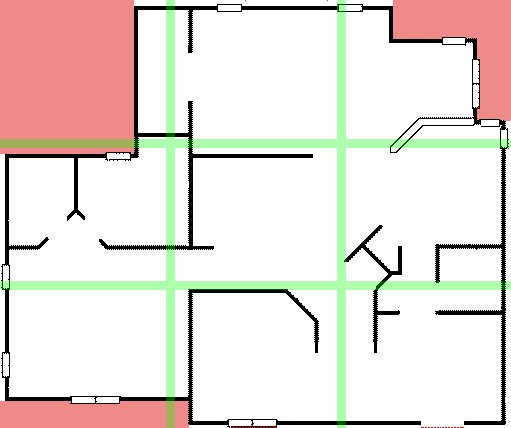
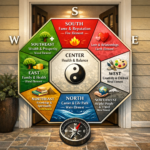
In Feng Shui, every part of a living space corresponds to a specific aspect of human experience, forming what is known as the Bagua Map—an energy grid that links physical space with life areas such as wealth, health, career, and relationships. Among these, the relationship sector is regarded as one of the most personal and sensitive zones, influencing not only romantic partnerships but also family ties, friendships, mentorships, and social interactions. Traditionally, when one stands at the main entrance of a home and looks inward, the entire right-hand side of the property symbolizes these emotional and interpersonal dimensions. This right-hand section reflects how residents connect, communicate, and express affection, trust, and mutual support.
Within this broader right-hand area, Feng Shui interprets three key sections, each resonating with distinct relational energies. The farthest back corner—often called the partnership or marriage area—embodies romantic love, emotional intimacy, and commitment. Enhancing this corner might involve placing pairs of harmonious objects, such as two candles or two matching stones, as symbols of equality and balance between partners. Gentle, nurturing colors like soft pinks, warm earth tones, or delicate reds are considered beneficial, as they inspire tenderness and passion while grounding emotional energy.
Middle Section With Children And Creativity
The middle section—associated with children and creativity—represents both literal offspring and the metaphorical “birth” of new ideas, projects, and joyful endeavors. This part signifies a household’s ability to nurture not just the young but also imagination, artistic expression, and emotional playfulness. A lively, cheerful atmosphere here can encourage openness, laughter, and generational harmony. When this space feels neglected or overly austere, it may suggest a lack of spontaneity or difficulty expressing affection freely. Introducing creative elements such as artwork, family photos, or handcrafted objects can help stimulate the flow of joyful Chi and improve familial relationships.
The section nearest the front door corresponds to others—the outer circle of one’s social world, encompassing friends, colleagues, neighbors, and community networks. This space governs how residents interact with the broader environment and express friendship, support, and cooperation beyond the home. Keeping this area accessible, organized, and welcoming encourages beneficial social connections and a sense of belonging. A well-tended environment here can draw supportive people and positive collaborations, both personally and professionally.
When a Feng Shui practitioner examines this right-hand side of a home, they often look for signs that reveal the emotional climate within the household. Areas filled with clutter, broken or forgotten objects, and piles of unaddressed items signal stagnation or unresolved energy. Symbolically, these obstructions correspond to emotional heaviness—feelings unspoken, lingering disagreements, or a resistance to vulnerability and renewal. Dampness, dim lighting, or stale air may further amplify feelings of disconnection or fatigue. By contrast, a space that feels open, balanced, and illuminated encourages the circulation of fresh Chi, promoting warmth, empathy, and emotional transparency among those who reside there.
Strength On The Left Side
When a Feng Shui practitioner examines the left-hand side of a home, they are not merely observing its physical structure or placement of furniture—they are studying a vital aspect of the home’s energy flow and symbolic balance. In classical Feng Shui, the left-hand side, when viewed from the front of the property facing inward, is traditionally associated with the Green Dragon—a powerful emblem of strength, growth, and support. This side represents qualities such as vitality, action, and protection, often connected to the masculine, ambitious energy that propels progress and determination in life.
A practitioner will carefully consider how this area is shaped, what structures or landscapes exist there, and how the energy, or chi, moves through it. For instance, if the left side of the home is higher or more protected than the right, it is believed to bring stability and reinforce opportunities for advancement. Conversely, if the left side is weak, cluttered, or lower in elevation, the home’s occupants might experience challenges related to motivation, career growth, or confidence.
The consultant might also analyze various environmental features such as trees, fences, neighboring buildings, water elements, or pathways positioned along this side. Each of these influences can either enhance or disrupt the natural harmony of the area. In interior spaces, the left side corresponds to specific sectors of the Bagua map—depending on the home’s orientation—and could relate to areas of life such as family, health, or wealth. The practitioner may recommend adjustments like adding supportive greenery, appropriate lighting, harmonious colors, or symbolic objects to restore balance and strengthen auspicious energy.
Ultimately, this part of the analysis underscores a core Feng Shui principle: that harmony between physical surroundings and energetic flow creates a more balanced, prosperous, and nurturing environment for those who live within it. By refining and understanding the left-hand side of a home, the practitioner helps ensure that the residents are supported by both the seen and unseen forces shaping their daily lives.
Making Adjustments
Simple adjustments can yield noticeable results: clearing pathways, introducing paired decorative pieces, placing blooming plants to symbolize growth, or using soothing light to nurture comfortable intimacy. Each change represents a physical affirmation of emotional intention—a statement that harmony, attentiveness, and love are valued within the space.
Ultimately, maintaining clarity, balance, and harmony within the relationship area of the home transcends mere decoration—it becomes a mindful practice of emotional care. The environment and its inhabitants form a continuous exchange: when one cleans or beautifies a space, one simultaneously refreshes inner energy and reaffirms connection with others. By consciously applying the principles of Feng Shui, residents can transform their homes into sanctuaries of mutual respect, trust, and affection, ensuring that love and positive energy circulate freely throughout their lives and relationships.
Pyron Tools
One tool to look at is Pyron Pink for the far end.
Pyron Grey for middle.
Pyron Metallic for close to the door.
This is a suggestion and something similar nature can also be used like using mirror instead of metallic pyron. Once installed see how the relationship strain get relieved and things start working for your clients. Have fun with these and other Pyrahealth suggestions.