Home→Vastu Compliant Home Layout: The Complete Room-by-Room Guide
Vastu Compliant Home Layout: The Complete Room-by-Room Guide
Use the ancient science of directional alignment to design a home that heals, protects, and energises every occupant
Your home’s floor plan isn’t just about square footage or architectural style — it’s a blueprint for your family’s health, relationships, and fortune. Vastu Shastra, the 5,000-year-old Indian science of architecture, teaches that the spatial arrangement of every room, entrance, and wall in your home directly influences the flow of prana (life force energy). In this comprehensive guide to creating a Vastu compliant home layout, we break down every zone, direction, and design principle you need — whether you’re building from scratch, renovating, or simply optimising a home you already live in.
Interior décor, colour choices, and furniture placement all matter in Vastu — but they are secondary to the foundational question: where are your rooms positioned relative to the eight cardinal directions? Even the most beautifully decorated home will struggle energetically if the kitchen sits in the Northeast or the master bedroom is in the North-East corner. Layout decisions — made at the design or purchase stage — determine the energetic DNA of the home for as long as it stands.
Vastu Shastra operates on a set of interlocking principles: the five elements (Pancha Bhoota), the eight directions, solar movement across the day, the earth’s magnetic field, and the cosmic energy grid known as the Vastu Purusha Mandala. When these forces are aligned in a home’s layout, the result is a space that naturally supports physical health, mental well-being, harmonious relationships, and professional success — all core pillars of what we champion at Pyra Health.
Research in environmental psychology broadly supports many of Vastu’s underlying premises. Studies show that natural light exposure, ventilation, and spatial organisation profoundly affect mental health. Vastu’s directional zoning, when correctly applied, maximises morning sunlight in the rooms where occupants wake up, ensures air flows through living areas, and establishes quiet zones for deep sleep — all evidence-based contributors to wellness.
Understanding the Vastu Purusha Mandala
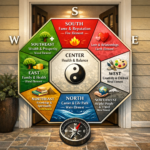
The Vastu Purusha Mandala is the master energy grid that underpins all Vastu planning. According to Vastu tradition, it represents a cosmic being (the Vastu Purusha) lying face-down across the plot of land, with his head in the Northeast and feet in the Southwest. The 81-square (9×9) grid divides the home into zones, each governed by a specific deity and elemental energy — and each corresponding to a specific aspect of life, from wealth and health to relationships and career.
“The Vastu Purusha Mandala is not just a symbolic diagram — it is the foundational planning grid used to design balanced, energy-aligned spaces. Even in modern homes, it acts as the master blueprint that determines how different zones function.”
At the very centre of the Mandala sits the Brahmasthan — the sacred energy core of the entire property, governed by Lord Brahma himself. This central zone must always be kept open, light, and free from heavy structures or pillars. Any obstruction of the Brahmasthan is considered one of the most serious Vastu defects, capable of affecting the health and harmony of all occupants.
Here is a simplified representation of how the Vastu Purusha Mandala maps onto a home’s floor plan:
💨
North-West
Guest Bedroom / Dining
Air · Vayu
💧
North
Living Room / Treasury
Water · Jal
🌅
North-East
Puja / Meditation Room
Space · Akasha
⚖️
West
Children’s Room / Study
Space · Akasha
✨
Brahmasthan
Open / Courtyard
Keep clear & unobstructed
☀️
East
Living Room / Entrance
Air · Vayu
🪨
South-West
Master Bedroom
Earth · Prithvi
🛡️
South
Store Room / Heavy Storage
Fire · Agni
🔥
South-East
Kitchen
Fire · Agni
Simplified Vastu Purusha Mandala — ideal room placement by direction for a standard home layout
The 8-Direction Vastu Zone Guide
Every direction in Vastu carries a distinct elemental energy and a governing deity that influences specific life domains. Understanding this directional map is the single most important step in designing — or auditing — a Vastu compliant home layout.
Direction
Element & Deity
Life Domain
Ideal Rooms
Strictly Avoid
North
Water · Kuber (Lord of Wealth)
Career, finances, opportunities
Living room, home office, treasury
Kitchen, toilets
Northeast (Ishanya)
Space · Shiva
Spirituality, wisdom, health
Puja/meditation room, open spaces, water features
Toilets, kitchen, heavy storage, master bedroom
East
Air · Indra (Solar Deity)
Health, prosperity, new beginnings
Main entrance, living room, children’s room
Toilets, dark storerooms
Southeast (Agneya)
Fire · Agni
Energy, vitality, metabolism
Kitchen, electrical panels, boiler
Bedrooms, puja rooms, study
South
Earth · Yama
Stability, protection, strength
Storage, garage, heavy furniture walls
Main entrance, water storage
Southwest (Nairiti)
Earth · Nairiti
Relationships, stability, grounding
Master bedroom, head of household’s room
Main entrance, kitchen, puja room
West
Space · Varuna (Lord of Water)
Gains, social life, creativity
Children’s room, study, dining room
Main entrance
Northwest (Vayuvya)
Air · Vayu
Movement, communication, travel
Guest bedroom, dining room, bathroom
Master bedroom (for head of household)
Plot Shape & Site Selection
A Vastu compliant home layout begins before the first brick is laid — with the shape and orientation of the plot itself. According to Vastu Vidya, the geometry of the land directly influences the energy quality of everything built upon it.
⬛
Square Plot — Most Auspicious
Equal on all four sides, a square plot balances all five elements perfectly. It represents stability, completeness, and equal energy distribution.
🟩
Rectangular Plot — Highly Auspicious
North-south elongated rectangles (longer on the north-south axis) are preferred. They support healthy energy flow and are ideal for modern homes.
⚠️
Irregular / L-Shaped — Challenging
Triangular, L-shaped, or polygonal plots create energetic imbalances and missing zones. Vastu remedies such as virtual boundary extension may be needed.
🧭
Plot Orientation
The plot should be aligned to true cardinal directions (not just magnetic north). Slight tilts require a certified Vastu compass calibration for accurate zone mapping.
💡 Pyra Health Tip: Before purchasing a plot or apartment, have a Vastu expert overlay the Vastu Purusha Mandala on the architectural drawing to identify any structural defects that cannot be corrected after construction. Prevention is always more effective — and less costly — than remediation.
The Ideal Vastu Floor Plan Room-by-Room
Below is a comprehensive, room-by-room breakdown of the ideal Vastu compliant home layout. Each placement is grounded in both elemental logic and the solar cycle — the ancient Vastu experts understood that different rooms serve different activities, and that different parts of the day bring different qualities of sunlight and energy into the home. For a deep dive into how to design each room’s interior once the layout is set, see our companion guide: Vastu Interior Design Tips for a Healthier Home.
🚪 Main Entrance
The entrance is the single most energetically significant element of the entire home — it is the gateway through which all prana enters. Vastu floor plan experts uniformly agree that the main door should face North, East, or Northeast wherever structurally possible.
North-facing entrance: attracts wealth, career stability, and new opportunities
East-facing entrance: the most health-positive orientation; draws in the beneficial rays of the morning sun
Northeast-facing entrance: the most spiritually auspicious; invites wisdom, divine grace, and clarity
The door must open inward and swing clockwise; the threshold should be elevated slightly
Ensure the entrance is always well-lit, clutter-free, and adorned with welcoming elements
🛋️ Living Room
The living room is best positioned in the North, East, or Northeast zones of the home to maximise social harmony and positive energy flow. This placement captures the most beneficial morning light and positions the social heart of the home in the zones associated with health and prosperity.
Heavy furniture (sofas, bookshelves) should anchor the South or West walls
The television belongs in the Southeast corner of the room
Keep the centre of the living room open — never place a load-bearing pillar in the Brahmasthan
A water feature or indoor plants in the North or Northeast of the room enhances the zone’s elemental quality
🔥 Kitchen
The kitchen governs the family’s health and nourishment, and is associated with the fire element (Agni). Its ideal location is the Southeast corner — the Agni corner — of the home. The Northwest is an acceptable alternative if Southeast is structurally unavailable.
The cook should always face East — toward the rising sun — while preparing food
The sink (water element) and the stove (fire element) must never be directly adjacent or on the same wall — elemental conflict disrupts health
Never place the kitchen in the Northeast (the sacred spiritual zone) or the Southwest
Kitchen cabinets should be fixed to the South or West walls
🛏️ Master Bedroom
The master bedroom is best placed in the Southwest corner — the earth zone — because the earth element provides the stability, grounding, and depth of rest that the head of the household needs. Vastu experts at Housing.com consistently identify the Southwest as the highest-priority placement for the primary sleeping space.
The bed should be positioned so the sleeper’s head points South or East — never North
Wardrobes and heavy storage belong against the Southwest wall of the room
Avoid mirrors facing the bed; if necessary, place them on the North wall
The Northeast corner of the bedroom should be kept light and free of heavy furniture
🧒 Children’s Bedroom
Children’s bedrooms thrive in the West or Northwest zones. The West is associated with learning, creativity, and social development — exactly the qualities a growing child needs. The Northwest (Air zone) is suitable for older children and promotes movement and communication.
🍽️ Dining Room
The dining room belongs in the West or Northwest of the home. The Vastu logic is rooted in solar science: between 6 PM and 9 PM — the typical dinner period — the sun is positioned in the Northwest sector, filling this zone with calm, settling light that promotes relaxed, nourishing mealtimes.
The dining table should be rectangular or square — never round or irregular
Diners should face East or North while eating
Do not place the dining table directly beneath a toilet or heavy balcony above
Connect the dining area to the kitchen via the Southeast pathway to maintain elemental coherence
🙏 Puja / Meditation Room
The prayer or meditation room belongs in the Northeast corner (Ishanya) — the most sacred and spiritually powerful zone in the entire home. This zone captures the first rays of the morning sun and is associated with divine clarity, wisdom, and purification.
Keep the space completely clutter-free, light, and minimally furnished
Use white marble flooring and lemon-yellow or white walls
Never build the puja room adjacent to or directly above/below a bathroom
Worshippers should face East or North while praying
🚿 Bathrooms & Toilets
Bathrooms should be located in the East, North, or Northwest of the home. The toilet seat itself should face North or South — never East or West. The Northeast is the most critical zone to protect from bathroom placement — a toilet in the Northeast is one of the most severe Vastu defects possible.
📚 Study / Home Office
The study or home office is best positioned in the East, North, or Northeast zones. Workers and students should face North or East while working — these directions align with the energies of prosperity, focus, and new opportunities. For more on optimising your workspace, see our Vastu home office tips.
🏗️ Staircase
Staircases should be located in the South, West, or Southwest zones of the home. They should always climb clockwise (left to right as you ascend). Avoid placing a staircase in the Northeast corner — this is considered one of the most disruptive Vastu errors for the home’s overall energy.
🏠 Garage / Store Room
Garages and storerooms are heavy, low-energy spaces and belong in the South, West, or Southwest zones. Never place heavy storage or a garage in the Northeast — it blocks the flow of the most sacred and health-promoting energy in the home.
North-Facing House Vastu Layout
North-facing homes are considered highly auspicious in Vastu — particularly for professionals, business owners, and anyone seeking financial growth. The North is governed by Kuber, the lord of wealth. When the main entrance faces North, the home continuously draws in wealth and career-supporting energy.
✅ North-Facing Layout Recommendations
Main door in the Soma, Bhallat, or Mukhya pada (Northern padas)
Living room in the North or Northeast
Kitchen in the Southeast, cooking facing East
Master bedroom in the Southwest
Puja room in the Northeast corner
Keep the North zone open and well-lit
Place a water feature or indoor plants in the North
❌ Avoid in a North-Facing Layout
Kitchen or toilets in the Northeast
Heavy construction or raised ground in the North
Overhead beams directly above the entrance
Blocked or dark main entrance
Garage or storage in the North zone
Staircase in the Northeast
East-Facing House Vastu Layout
East-facing homes are considered the most health-positive orientation in Vastu Shastra. The East is governed by the solar deity Indra and the element of air. Homes facing East receive the maximum benefit of the rising sun’s energy — associated with vitality, fresh beginnings, and physical healing.
The ideal main door placement for an east-facing home falls in the Jayant or Mahendra pada — the most auspicious positions within the East sector. Homes that capture the morning sun through their main entrance are believed to provide exceptional health benefits to all occupants.
Living room and children’s bedrooms benefit enormously from East placement
Ensure large windows on the East wall of the master bedroom to harness morning light
The kitchen in the Southeast corner naturally faces the occupant East while cooking — perfectly aligned
A water body (pond, fountain, or even a large pot of water) in the Northeast amplifies the health-positive energy of an east-facing layout
South & West-Facing House Vastu Layout
South and West-facing homes are often considered unfavourable in popular Vastu discourse — but this is an oversimplification. Both orientations can be highly auspicious when the layout is properly designed with the right entrance positioning and room placement.
For south-facing homes, the most auspicious entrance positions are the Vitatha or Grihakhat pada. An improperly placed South-facing entrance (particularly in the Southwest corner) is genuinely problematic and should be corrected. For West-facing homes, the Pushadant or Sugreev pada are the recommended entry positions.
One of the most common concerns people bring to Vastu consultants is: “My apartment was built before I moved in — I can’t change anything structural. Is Vastu even possible for me?” The answer is a resounding yes.
Modern Vastu practitioners apply the Mandala principles in relative terms — treating the apartment’s entrance side as the reference point for directional mapping. Even when true cardinal directions aren’t available, the Mandala can be applied functionally: allocating activities to zones based on the grid’s energy patterns, even if room placement is fixed.
🧭
Relative Directional Mapping
Apply the Mandala with the entrance wall treated as East (regardless of true cardinal direction). Zone assignments follow from there.
🛋️
Furniture as Vastu Tool
When rooms can’t move, shift energy through furniture placement. Heavy pieces in the Southwest, light objects in the Northeast — the fundamental rule applies at any scale.
🪟
Windows & Ventilation
Ensure windows on the North and East walls are kept unobstructed and open regularly to draw in positive, health-supporting energy.
🔮
Micro-Mandala in Each Room
Apply Vastu zoning within individual rooms — each room has its own mini Brahmasthan that should be kept open, and its own directional energy zones for furniture and activities.
Vastu Layout Compliance Checklist
Use this checklist to perform a quick Vastu audit of any existing or planned home layout. For a thorough analysis, we always recommend consulting a certified Vastu professional.
Determine True DirectionsUse a calibrated compass (away from electrical interference) or a Vastu-specific app to map your home’s true cardinal directions. Mark all eight zones on a scaled floor plan.
Audit the Main EntranceIs the main door in the North, East, or Northeast? Is it well-lit, opens inward, and free of clutter or obstructions? Check for overhead beams above the entrance.
Check the BrahmasthanIs the central zone of the home open and free of load-bearing pillars, heavy furniture, or toilets? The centre must breathe freely.
Verify the Kitchen ZoneIs the kitchen in the Southeast? Does the cook face East? Are the sink and stove separated? Is the kitchen away from the Northeast corner?
Assess Bedroom PlacementIs the master bedroom in the Southwest? Do sleepers have their heads pointing South or East? Are there mirrors facing the bed?
Inspect the Northeast CornerIs the Northeast zone light, open, and sacred? Are there any toilets, kitchens, heavy storage, or staircases violating this most auspicious zone?
Review the SouthwestIs the Southwest the heaviest, most solid part of the home? Are the highest-occupancy rooms (master bedroom) positioned here for stability and grounding?
Check Natural Light & VentilationDo North and East walls have adequate windows? Are there obstructions blocking morning sunlight from entering the home’s main living areas?
Vastu Remedies for Layout Defects
Not every home can achieve a perfect Vastu layout — structural realities, pre-existing construction, and budget constraints often make ideal placement impossible. Fortunately, Vastu offers a rich toolkit of non-demolition remedies that can significantly mitigate the effects of layout defects.
🔺
Vastu Pyramid Strips
For properties with cut or extended corners — major Vastu Doshas — directional pyramid strips placed at specific points can energetically compensate for the missing zone.
🪞
Mirrors for Zone Extension
A strategically placed mirror on a deficient zone wall can visually and energetically “extend” a missing direction. Vastu-specific mirror placement differs from general décor use.
🌿
Plants for Northeast Activation
If the Northeast is compromised, placing low-maintenance indoor plants (Tulsi, bamboo, or peace lily) in the Northeast zone of each room helps restore the element’s natural energy.
💡
Lighting to Activate Dark Zones
Persistent warm lighting in an energetically deficient zone (such as the Southeast if the kitchen is misplaced) activates the fire element and helps compensate for structural misalignment.
🧂
Sea Salt Cleansing
Placing bowls of uncrushed sea salt in the corners of a deficient zone — and replacing them monthly — absorbs accumulated negative energy from layout imbalances.
🎐
Wind Chimes & Crystals
Metal wind chimes in the Northwest activate air energy. Clear quartz crystal clusters placed in the Northeast stimulate spiritual clarity and health when the zone cannot be physically opened up.
Frequently Asked Questions
❓ What is the single most important factor in a Vastu compliant home layout?
If you could only get one thing right, it would be the Northeast zone. Keeping the Northeast corner of your home and each room open, light, clean, and free of toilets, kitchens, or heavy storage is the single highest-impact Vastu decision you can make. The Northeast governs health, spirituality, and divine grace — and its violation is associated with more persistent life problems than almost any other Vastu defect.
❓ Can I create a Vastu compliant layout in an apartment I don’t own?
Yes. While you can’t alter the structural layout of a rented apartment, you can apply relative directional mapping, optimise furniture placement, use Vastu remedies (crystals, plants, salt bowls, mirrors), and make colour and lighting choices that significantly improve the home’s energy. Our companion article on Vastu interior design tips covers exactly this scenario.
❓ Is an east-facing or north-facing house better according to Vastu?
Both are excellent orientations. East-facing homes are considered the most health-positive, as they maximise exposure to the morning sun’s beneficial rays. North-facing homes are considered the most wealth-positive, being governed by Kuber, the deity of prosperity. The “better” orientation depends on your priorities — a young family prioritising health may prefer East, while a business owner focused on financial growth may prefer North.
❓ What is the Brahmasthan and why must it be kept open?
The Brahmasthan is the central energy node of the home — the zone governed by Lord Brahma in the Vastu Purusha Mandala. It acts as the energetic core from which prana radiates to all other zones of the home. Any obstruction — a load-bearing column, toilet, heavy furniture cluster, or enclosed room — in this zone is believed to choke the home’s vital energy, negatively affecting the health and harmony of all occupants.
❓ How do I perform a basic Vastu audit of my existing home?
Start by determining your home’s true cardinal directions using a compass, then draw a simple floor plan and divide it into the nine Vastu zones (8 directions + centre). Check each zone against the ideal room placement guide in this article. Make note of any major conflicts — particularly anything in the Northeast (toilets, kitchens, heavy storage) or a missing/enclosed Brahmasthan. For a full audit, consult a certified Vastu professional through Pyra Health.
❓ How is a Vastu layout different from Feng Shui floor plan design?
Both disciplines aim to optimise the energy flow within a built space, but they use different frameworks. Vastu is rooted in the Vastu Purusha Mandala — a fixed cosmic grid mapped to cardinal directions — and the five Indian elements. Feng Shui uses the Bagua map, a flexible energy grid that can be oriented to the entrance regardless of compass direction, and operates with a different set of five elements (wood, fire, earth, metal, water). Both are valuable systems; Vastu tends to place greater emphasis on directional rigidity and solar science.
Build a Home That Supports Your Health
Our Vastu wellness experts can audit your current layout, advise on new home purchases, and create a personalised room-by-room action plan — no demolition required. Book a Vastu Layout Consultation →