The Inner Revolution: A Deep Dive into The Osho Upanishad
In the modern quest for wellness, we often find ourselves checking off boxes: organic diet, 10,000 steps, a consistent sleep schedule, and perhaps a few minutes of a guided meditation app. But at PyraHealth, we know that true vitality isn’t just the absence of disease; it is the presence of a “soul-deep” exuberance.
When we look for the ultimate manual for this inner exuberance, few texts are as provocative, expansive, or transformative as The Osho Upanishad. This isn’t just a book; it is a recorded “lion’s roar” from one of the most controversial and influential mystics of the 20th century. Spoken in the mid-1980s, these discourses represent a bridge between the ancient wisdom of the East and the skeptical, scientific mind of the West.
To understand this work, we must first reclaim the word Upanishad. Etymologically, it translates to upa (near), ni (down), and shad (sit). It describes the intimate act of sitting down near a Master to catch a truth that cannot be written in a textbook.
Historically, the Upanishads (like the Chandogya or Mandukya) were the culmination of Vedic thought—the Vedanta. They moved away from external rituals and toward the internal landscape. Osho, however, argues that an Upanishad cannot be a “dead” book from five thousand years ago. For the truth to be transformative, it must be alive.
In The Osho Upanishad, Osho recreates this ancient atmosphere in a contemporary setting. He isn’t interested in providing a philosophy to be memorized; he is providing a process to be experienced.
The Core Philosophy: Zorba the Buddha
At the heart of these 80 discourses is Osho’s vision of the “New Man,” whom he famously nicknamed Zorba the Buddha. This concept is particularly relevant to the PyraHealth community, as it advocates for a synthesis of material health and spiritual depth.
Zorba the Greek: Represents the body, the senses, the earth, and the enjoyment of the physical world. He is the person who can dance, drink, and love with totality.
The Buddha: Represents the soul, the silence, the heights of consciousness, and the transcendence of the ego.
Osho argues that for centuries, humanity has been split. Religions told us to deny the body to find the soul (the “Ascetic”), while materialism told us to deny the soul to enjoy the body (the “Hedonist”). The Osho Upanishad suggests that a healthy human being is a whole human being—someone who has their feet firmly on the ground but whose head reaches the stars.
Witnessing: The Mechanism of Transformation
If you ask any wellness expert about the “secret sauce” of mental health, they will likely point to Mindfulness. In The Osho Upanishad, this is explored through the concept of Sakshin or “Witnessing.”
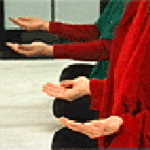
Osho describes the mind as a crowded highway. Thoughts, memories, and anxieties are the cars passing by. Most of us are standing in the middle of the road, getting hit by the traffic. Meditation, according to these discourses, is simply the act of stepping onto the sidewalk and watching the traffic without judgment.
Why Witnessing Works:
Disidentification: You realize you have a thought, but you are not the thought.
The Gap: By watching, you create a tiny gap between yourself and your reactions. In that gap lies your freedom.
The Death of the Ego: The ego survives on your identification with the mind. When you watch, the ego loses its nourishment.
[Image showing the neurological difference between a “reacting” brain and a “witnessing” brain during meditation]
The Scientific Mystic: Bridging Two Worlds
One reason The Osho Upanishad resonates with the modern reader is Osho’s refusal to be “unscientific.” He often speaks of meditation as a “science of the interior.” Just as physics explores the laws of matter, meditation explores the laws of consciousness.
He frequently references the objective nature of science and challenges his listeners to treat his words as hypotheses. “Don’t believe me,” he often says, “experiment and see.” This resonates deeply with the PyraHealth philosophy of self-optimization. We encourage our readers to use tools—whether they are Pyramid Energy collectors or deep breathing techniques—and measure the results in their own lives.
Addressing the “No-Mind” (Unmani)
A recurring theme in the 80 talks is the state of Unmani, or “No-Mind.” This is often misunderstood as a state of stupidity or a blank trance. On the contrary, Osho describes No-Mind as a state of pure clarity.
When the “dust” of constant thinking settles, the “mirror” of consciousness can reflect reality as it is, without distortion. In terms of modern health, this is the ultimate antidote to Cortisol-driven stress. When the mind is silent, the body’s parasympathetic nervous system takes over, allowing for deep cellular repair and emotional regulation.
The Structure of the Work
The Osho Upanishad is a massive volume, typically divided into several parts. The discourses are a mix of:
Direct Teachings: Where Osho expounds on the nature of existence, love, and death.
Q&A Sessions: Where he answers questions from seekers. These are often the most entertaining parts, as Osho uses his sharp wit to dismantle the “spiritual ego” of the questioner.
Jokes and Anecdotes: Osho is famous for using humor as a spiritual tool. He believes that a person who cannot laugh cannot be truly religious. Laughter, he says, is the closest thing to meditation.
How to Read The Osho Upanishad
If you are new to Osho’s work, diving into an 80-discourse series can feel overwhelming. Here is a suggested “PyraHealth Roadmap” for approaching the text:
1. Listen Rather Than Read
These were originally spoken words. The “vibration” of the voice is part of the Upanishadic experience. You can find many of these talks in audio format at the Osho Library.
2. Don’t Look for Logic
If you try to read this like a textbook on biology, you will get frustrated. Osho often contradicts himself to prevent the reader from creating a new “belief system.” Read it like poetry; let the words wash over you.
3. Combine with Movement
Osho taught that modern people are too repressed for silent meditation to work immediately. He recommended Active Meditations (like Dynamic or Kundalini) before sitting in silence. This clears the “junk” out of the nervous system so that the silence of the Upanishad can actually take root.
The Connection to Pyramid Energy
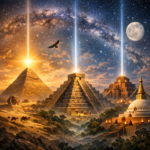
At PyraHealth, we often discuss the power of Pyramid structures to harmonize energy. Interestingly, the “Upanishadic” environment Osho describes is a spiritual version of a pyramid.
Just as a pyramid focuses energy to a point, the “Communion” between a Master and a disciple focuses the “energy of awareness.” In The Osho Upanishad, Osho describes how the presence of a group of meditators creates a “buddhafield”—a localized area of high-vibrational energy that makes it easier for individuals to “jump” into higher states of consciousness.
Final Thoughts: A Call to Inner Adventure
In a world that is increasingly digitized, polarized, and stressed, The Osho Upanishad offers a radical alternative. It suggests that the “answer” isn’t out there—not in a better job, a different politician, or even a better supplement. The answer is the “witness” who is looking out from behind your eyes right now.
As Osho concludes in many of his talks, the journey is long, but the destination is always right here, in this very breath.
We invite you to explore these discourses not as a scholar, but as an adventurer. If you’ve been feeling “stuck” in your wellness journey, perhaps what you need isn’t more information, but a different kind of sitting down—a sitting down with your own silence.
Explore more spiritual health resources at PyraHealth.com and join our community today.
Key Takeaways Table
Concept
Modern Application
Wellness Benefit
Zorba the Buddha
Balancing career/fun with meditation.
Holistic Life Satisfaction
Witnessing
Observing stress triggers without reacting.
Reduced Anxiety & Emotional Intelligence
No-Mind
Digital detox and mental silence.
Lowered Cortisol & Better Sleep
Humor
Not taking the “spiritual path” too seriously.
Endorphin Release & Social Connection
Note: Osho’s teachings are vast and sometimes paradoxical. This article serves as an introductory guide. For the full experience, we recommend engaging with the original source materials directly.