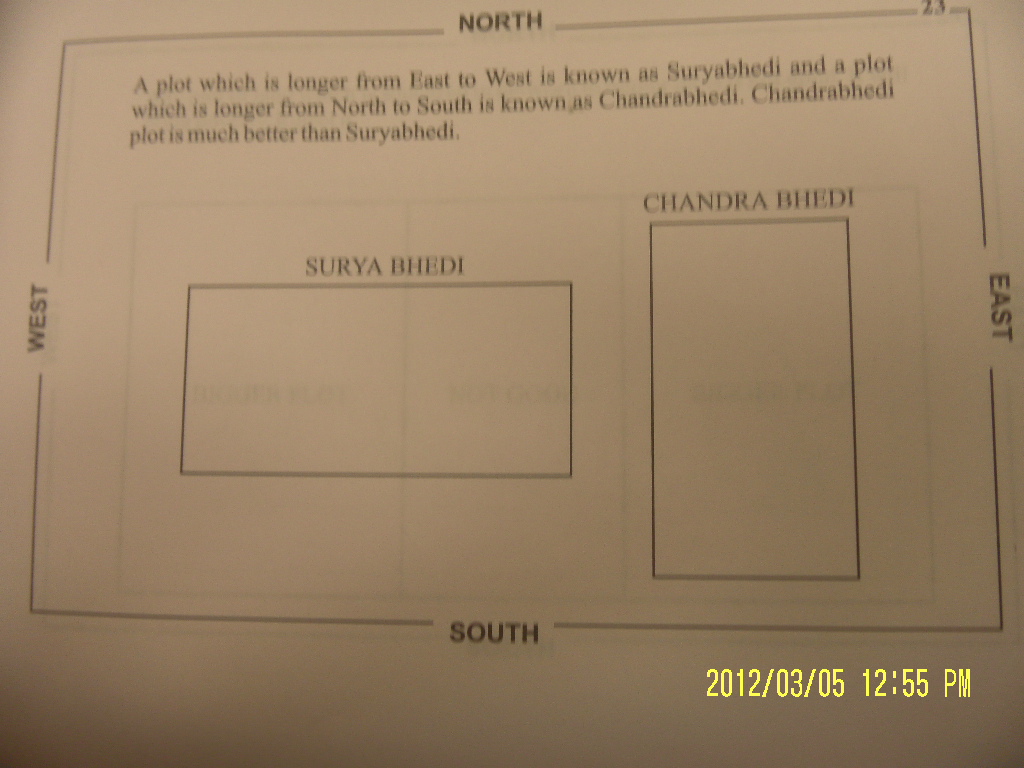
1) A yard which is longer from East to West is known as Suryabhedi and a yard which is longer from the North to South is known as Chandrabhedi. Chadrabhedi yard is much better than Suryabhedi.
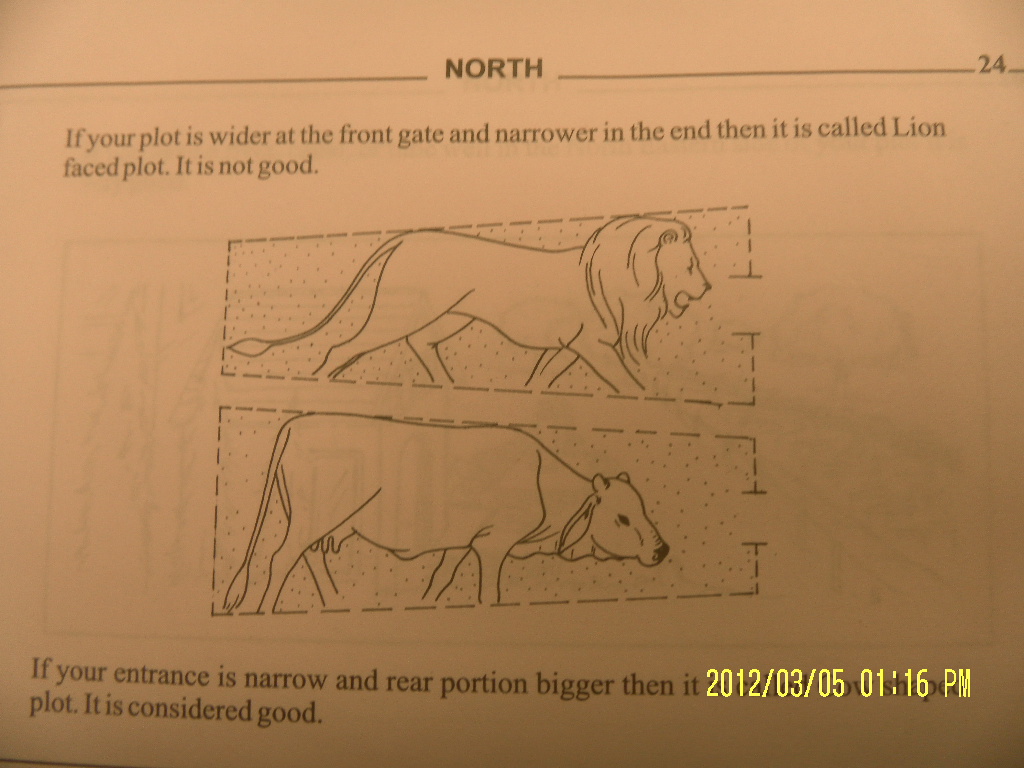
2) If your yard is wider at the at the front gate and narrower in the end then it is called Lion faced yard. It is not good. If your entrance is narrow and rear portion bigger then it is called Cow shaped yard. It is considered good.
3) Any yard which is squeezed in between two bigger yards is not good. It will bring poverty. Reject it.
4) If you have a river, canal,fountain, or tube well in the Northeastern side of your yard it is very good.
5) Reject any site if a hill is towards North or East of your yard.
6) The yard should not be in the neighborhood of any religious place, public places like marriage halls, hospitals, factories and burial or cremation grounds.
7) If you leave more space on the West side in your house the male members of the house will get badly affected.
Importance of Yard Characteristics in Vastu
The characteristics of a yard play a crucial role in determining the overall energy balance of a property. In Vastu Shastra, the shape, slope, and surroundings of a yard directly influence health, wealth, and peace of mind.
A well-balanced yard allows positive energy to flow freely, while irregular shapes or improper extensions can create disturbances. For example, yards that are wider in the front and narrow at the back are considered less favorable, while those that expand towards the Northeast are highly beneficial.
Proper planning of open spaces, water elements, and directional alignment helps in maintaining harmony with natural forces. By understanding these characteristics, homeowners can make informed decisions that support long-term growth and stability.
To understand more about yard planning and Vastu principles, refer to Vastu Shastra.