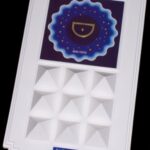
Yantra is the Sanskrit word for “instrument” or “machine,” but its meaning extends far beyond this simple translation. It represents any tool, mechanism, or structured device that facilitates a particular function—whether material, mechanical, mental, or spiritual. The term is deeply contextual; depending on what it refers to, a yantra can embody the idea of a physical instrument used in rituals, a symbolic design for meditation, or even a conceptual framework through which cosmic principles are understood. In essence, much like the English word “instrument,” yantra denotes anything that channels energy, organizes form, or serves as a medium for achieving a specific purpose.
In traditional Indian philosophy, the concept of yantra is interwoven with profound metaphysical and spiritual dimensions. Yantras are not merely artistic designs; they are sacred geometric diagrams believed to represent and embody divine energies. Composed of precise patterns—often using triangles, circles, lotuses, and other symmetrical figures—each yantra serves as a visual map of spiritual forces operating within the universe and within the self. For example, the Sri Yantra, one of the most celebrated and complex yantras, consists of interlocking triangles representing the union of masculine and feminine energies, symbolizing the cosmic balance between Shiva and Shakti. Meditating upon such forms is said to harmonize the mind, deepen concentration, and awaken higher states of awareness.
In Western contexts, yantras are sometimes viewed primarily as decorative or meditative symbols, similar in purpose to mandalas found in Tibetan and Buddhist traditions. However, in the Eastern esoteric sciences, their use is far more ritualistic and systematic. A yantra can be consecrated, empowered through specific mantras (sacred chants), and used as a focus during worship or meditation to channel particular vibrations. Practitioners often create or draw yantras according to strict geometric rules, believing that the precise proportion of lines and angles influences the energy it emits. In this way, the yantra functions as both a symbolic and an energetic instrument—bridging the material and the spiritual, the visible and the invisible.
Ultimately, a yantra exemplifies humanity’s quest to bring order to the abstract and divine through structure and symmetry. Whether seen as a mystical diagram, a meditative aid, or a philosophical model of reality, it continues to fascinate artists, scholars, and seekers across cultures for its blend of aesthetic perfection, mathematical precision, and profound spiritual significance.